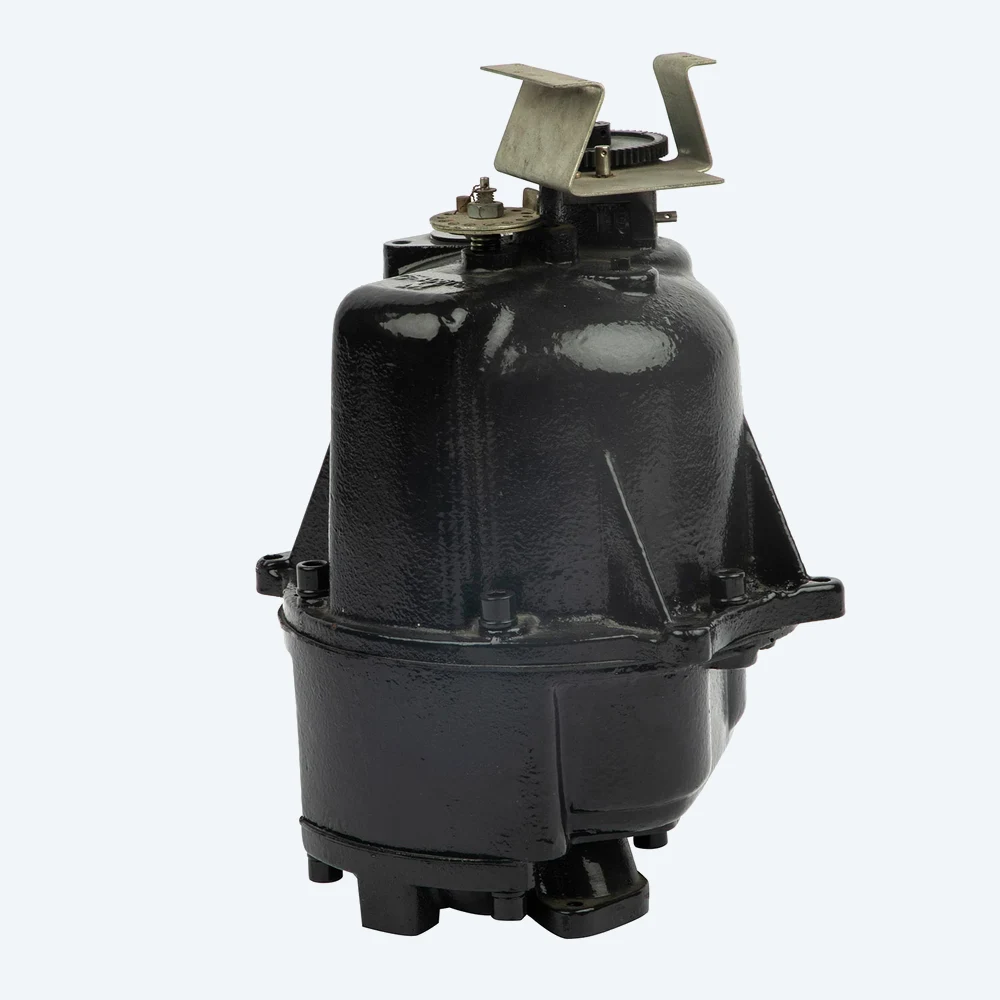
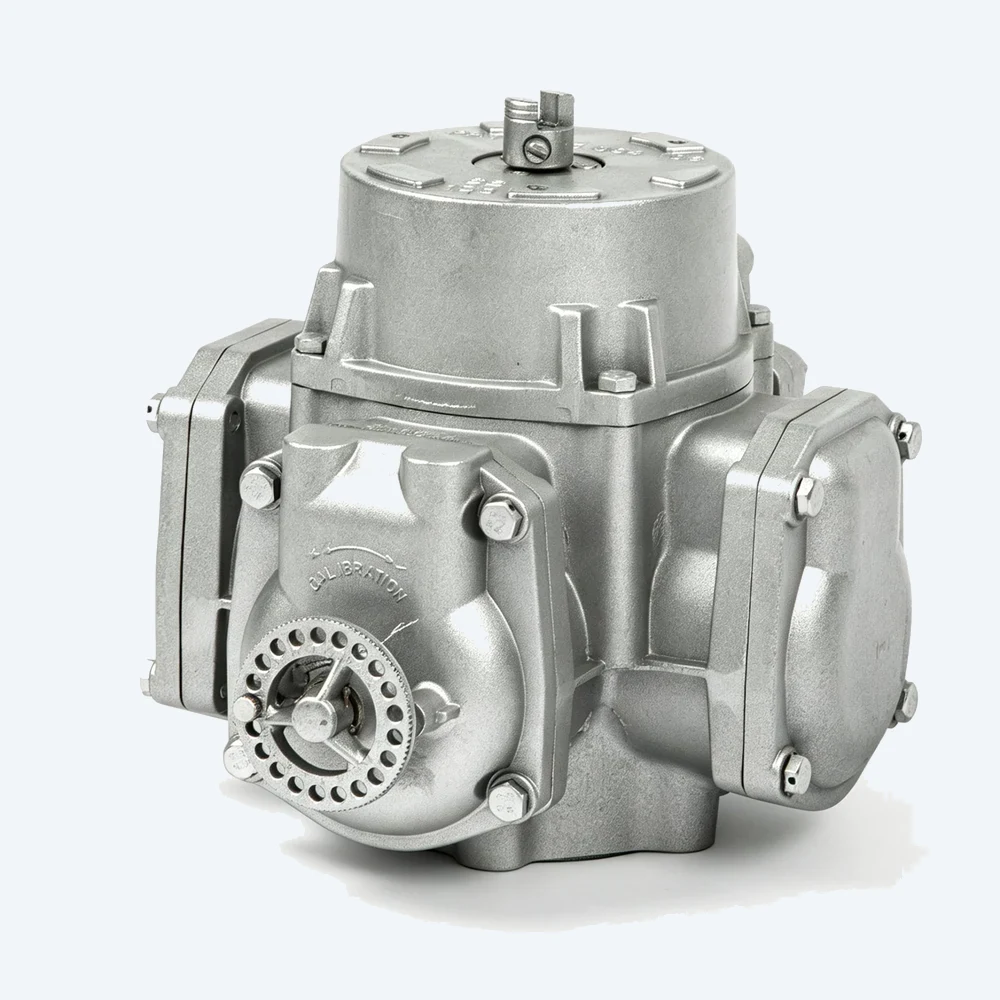
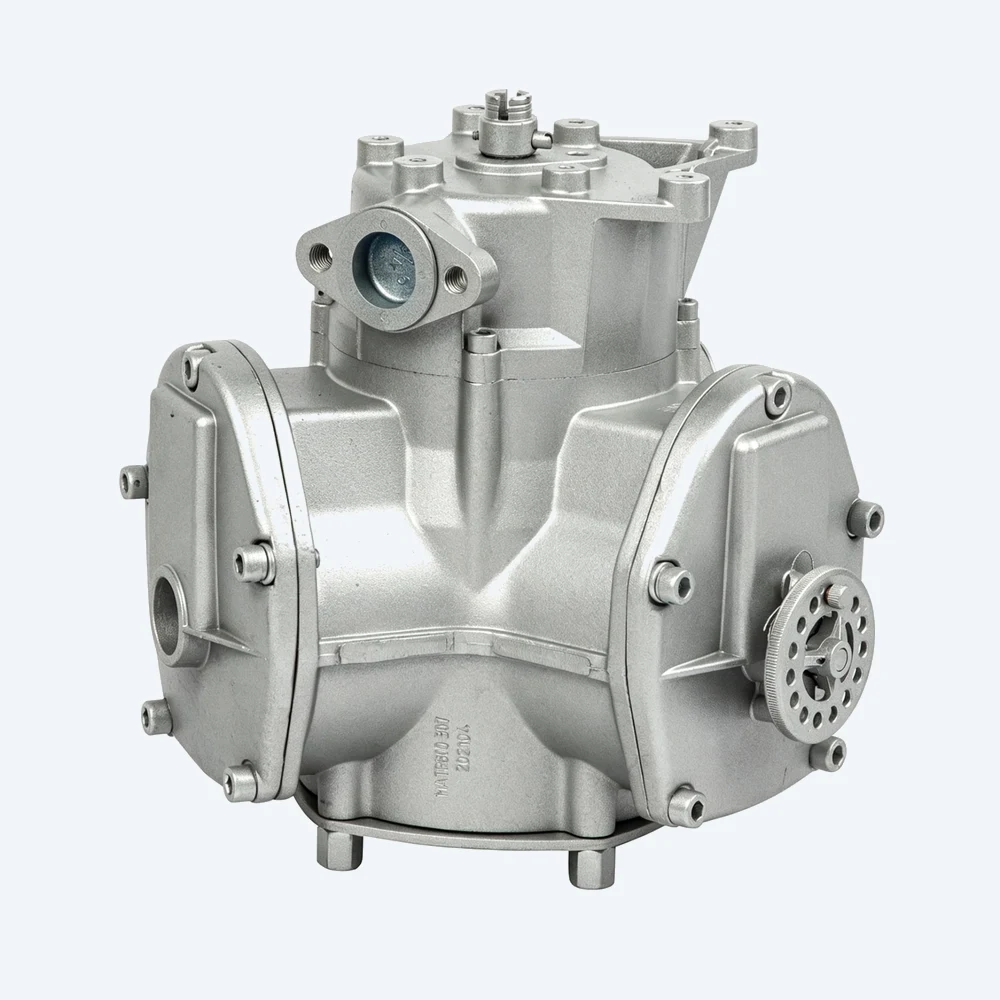
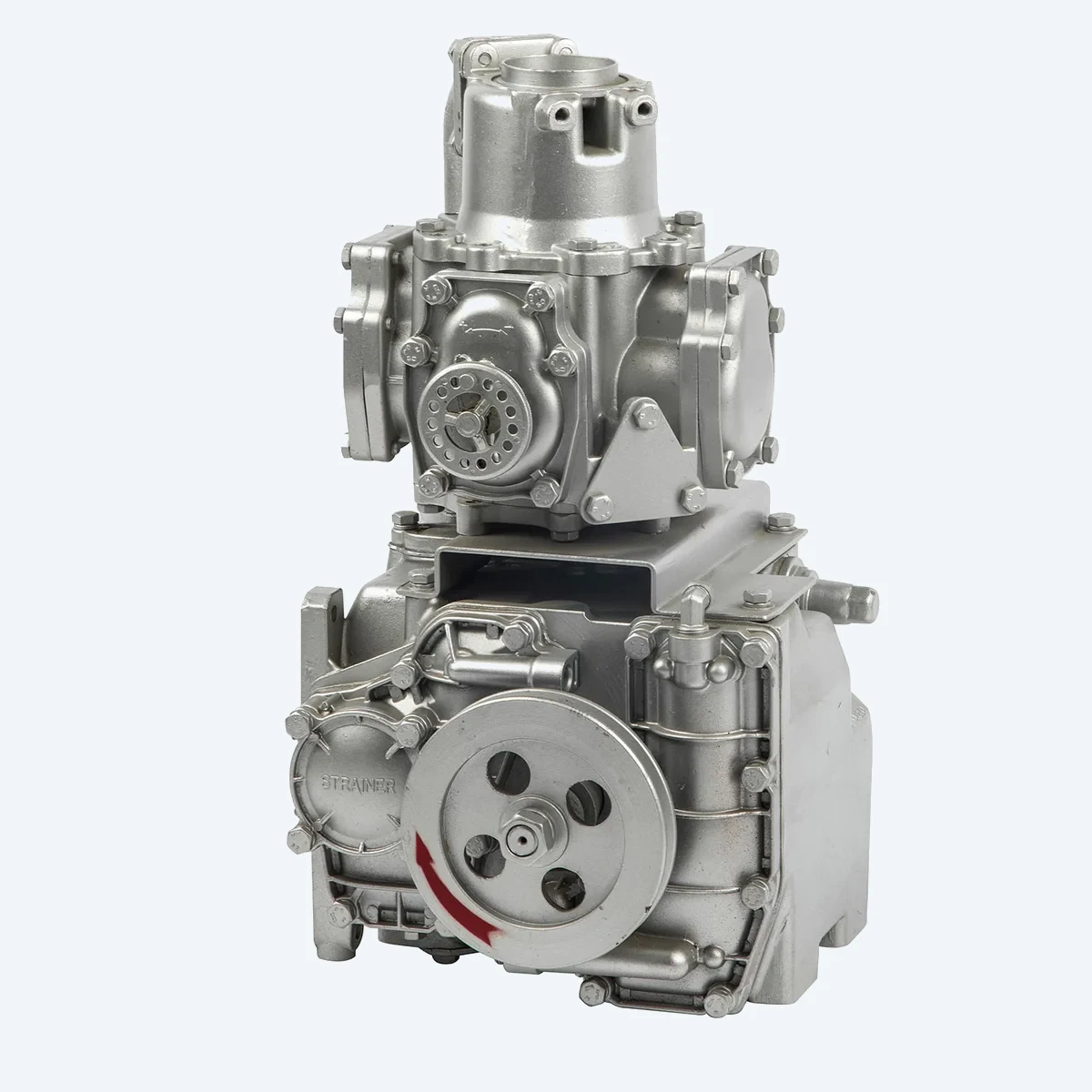
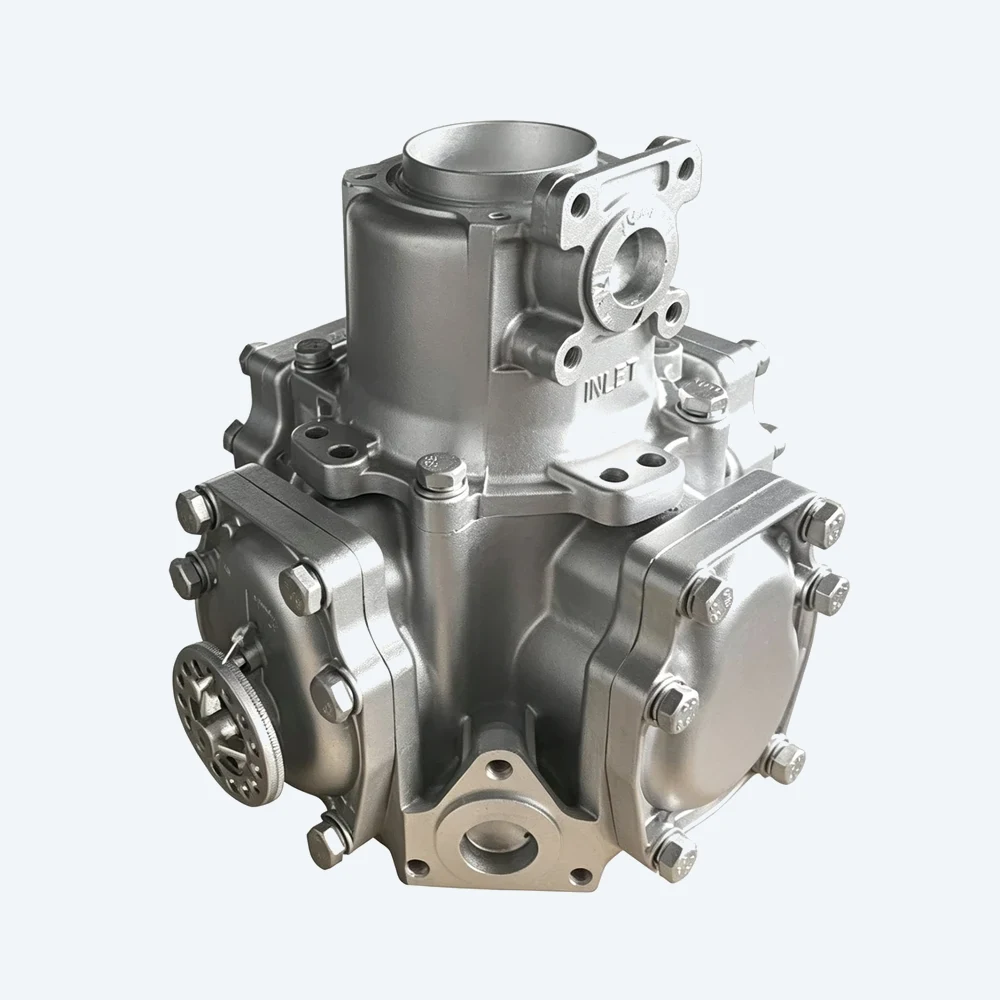
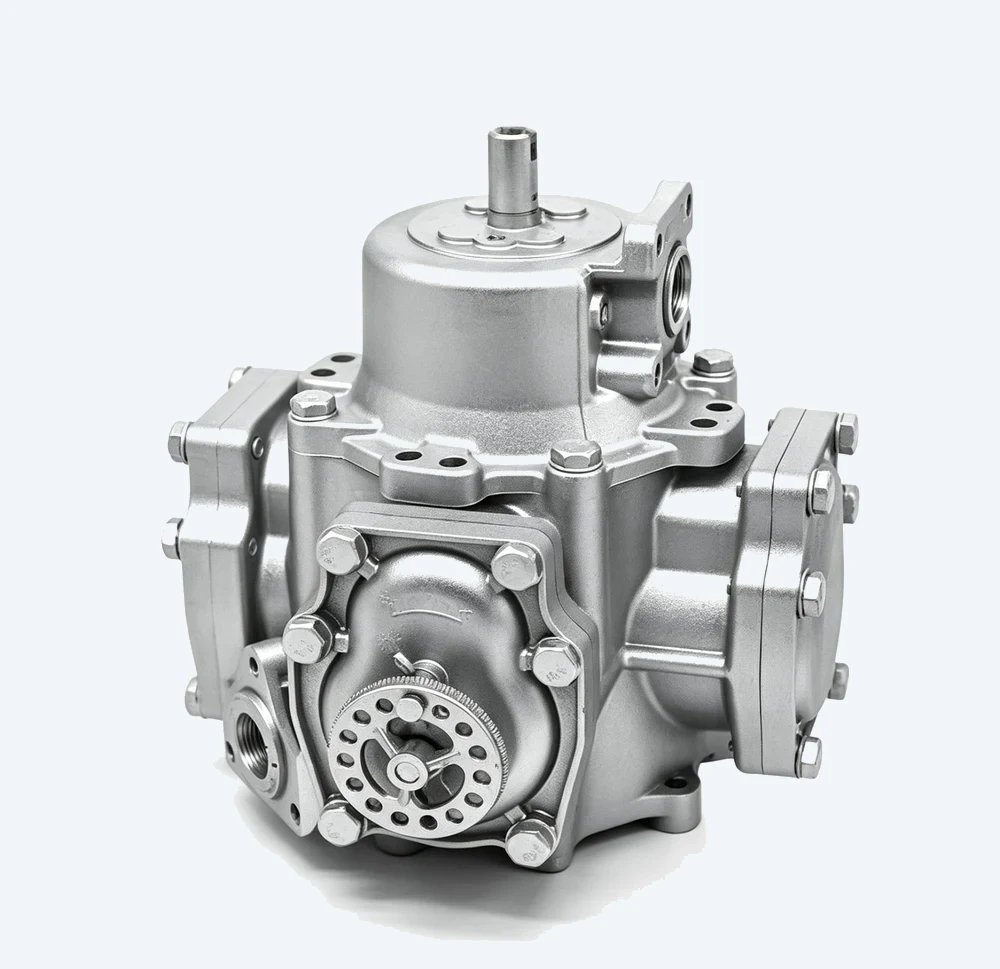
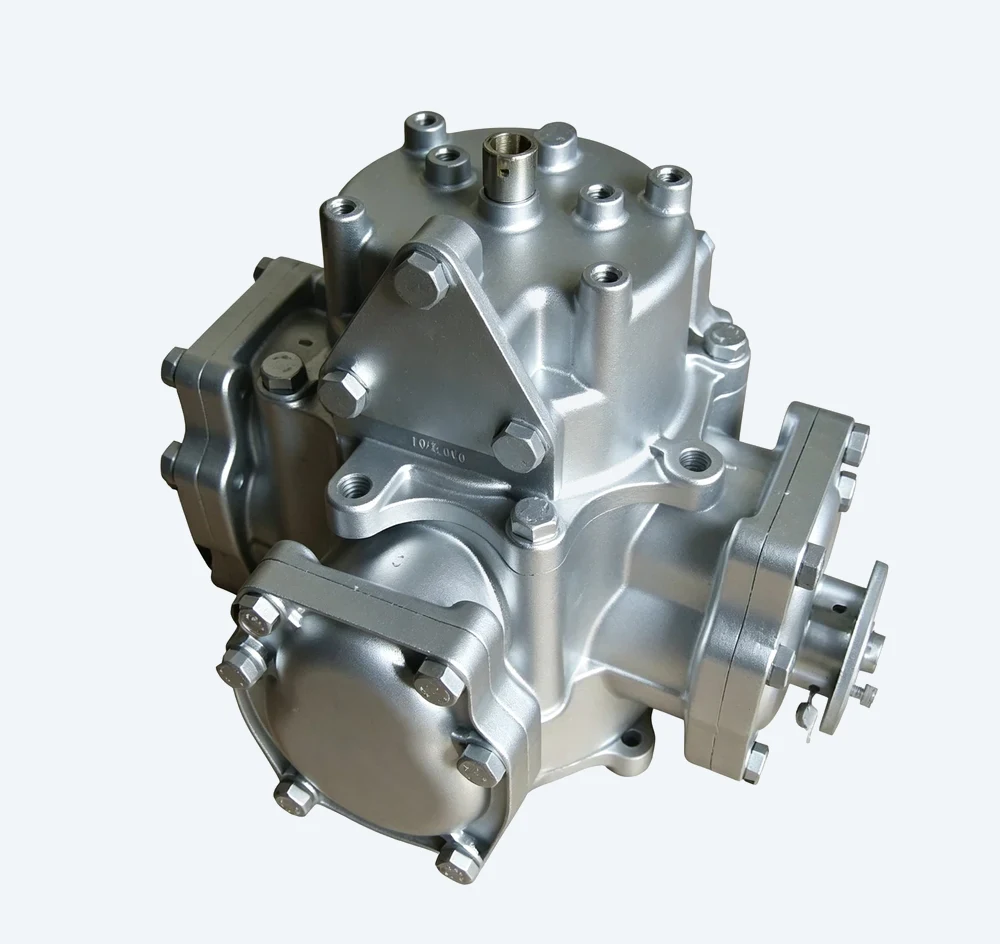
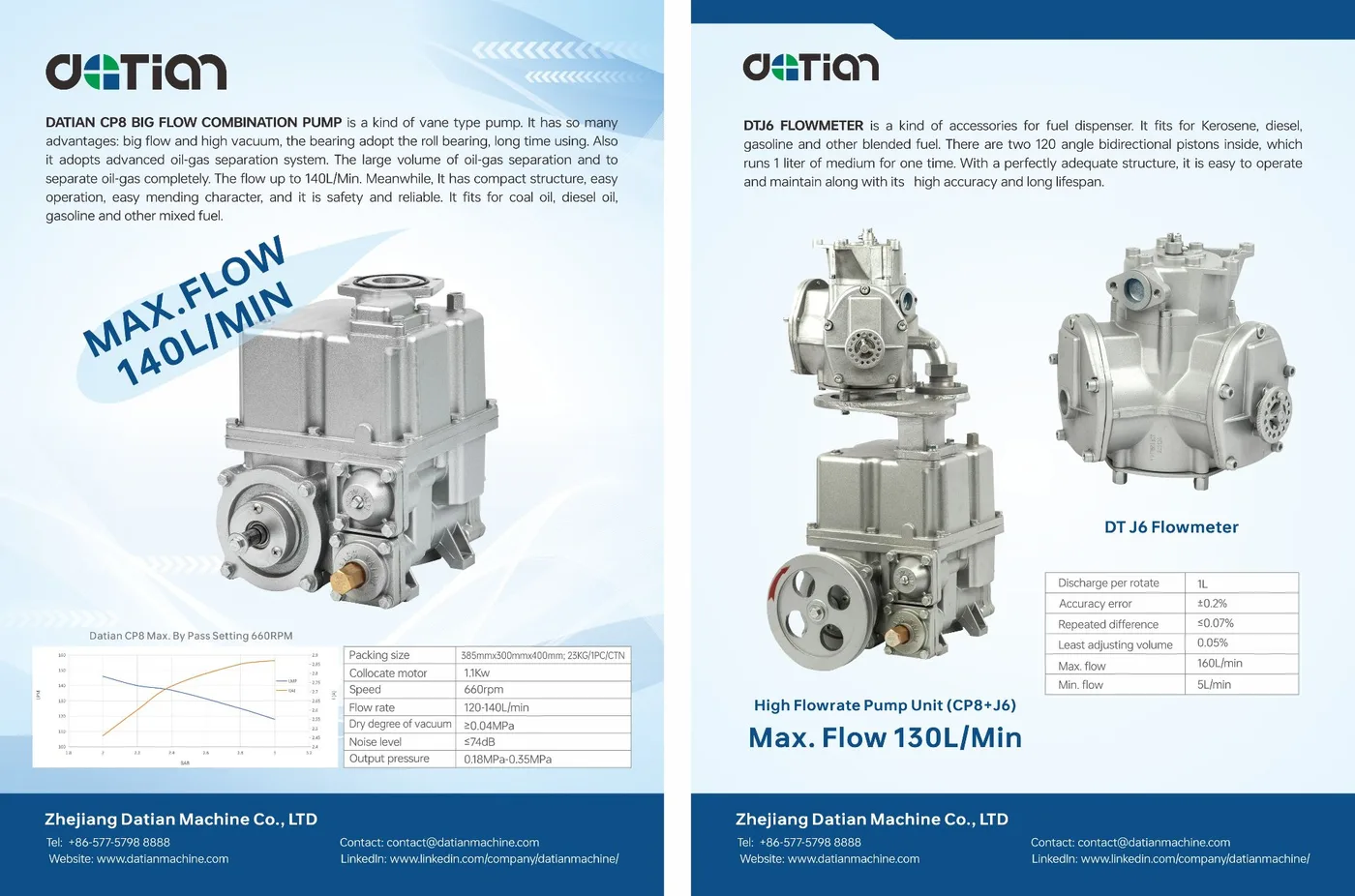
Buyers use two spellings for the same part of a dispenser and both are correct: a fuel flow meter and a fuel flowmeter are the same article, the chamber that turns flow into a billable quantity. Every meter we build works on the same positive displacement flow meter principle, also written positive displacement flowmeter: a measuring chamber of known volume rotates with the flow, so accuracy holds when viscosity or temperature shifts.
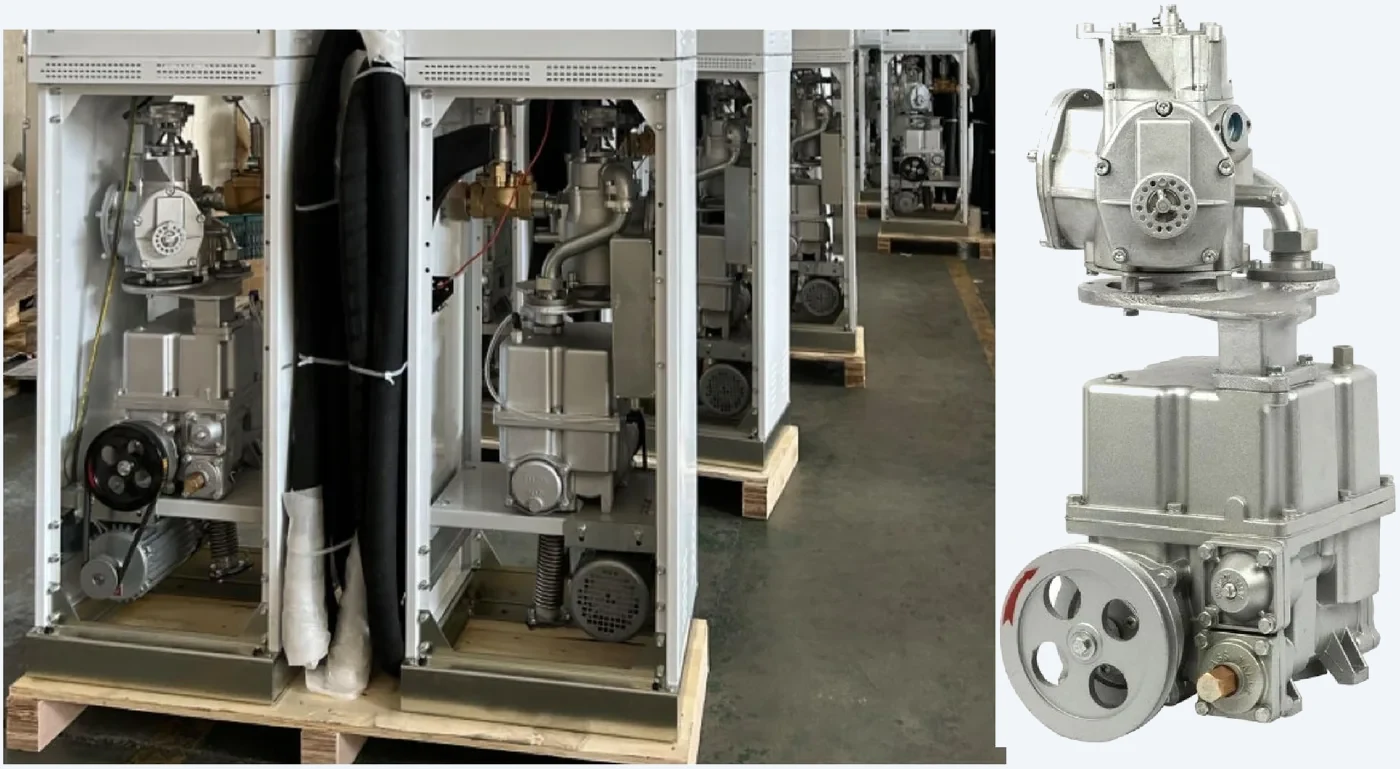
Two families cover the work. The DTJ range is the dispenser range — DTJ3, DTJ4 in three inlet sizes, DTJ6 from 5 to 160 L/min and DTJ100 for compact cabinets — sized to drop into an existing dispenser. The M-Series is the industrial range for bulk transfer, truck loading and depot metering, and it is the family quoted with a choice of register. A mechanical flow meter uses a dial register and needs no external power, which suits a tanker or a depot line. An electronic flow meter replaces the dial with an ARM-based counter and an LCD, adding free or preset delivery and an optional ticket printer; because that readout is digital, the same configuration also appears in searches as a digital flow meter. All three configurations share the same meter body and the same accuracy and pressure ratings.
As a flowmeter manufacturer we build the chamber, the register and the calibration bench, so the figure on the nameplate is measured here rather than inherited from a supplier. That covers a standard diesel flowmeter position, a fuel dispenser flow meter for high-flow cabinets and the lpg flowmeter line for liquefied gas. Each dispenser-grade model is a high accuracy flow meter at ±0.2% across its working range, with the LPG line quoted at ±0.5%.
One question decides most flow meter for fuel dispenser projects: does the meter drive a mechanical counter, or a controller that counts pulses and therefore needs pulses per litre fixed against a K-factor? Answer that and the model follows. Tell us the media, the flow range and the dispenser brand, and we will match the meter within 24 hours.